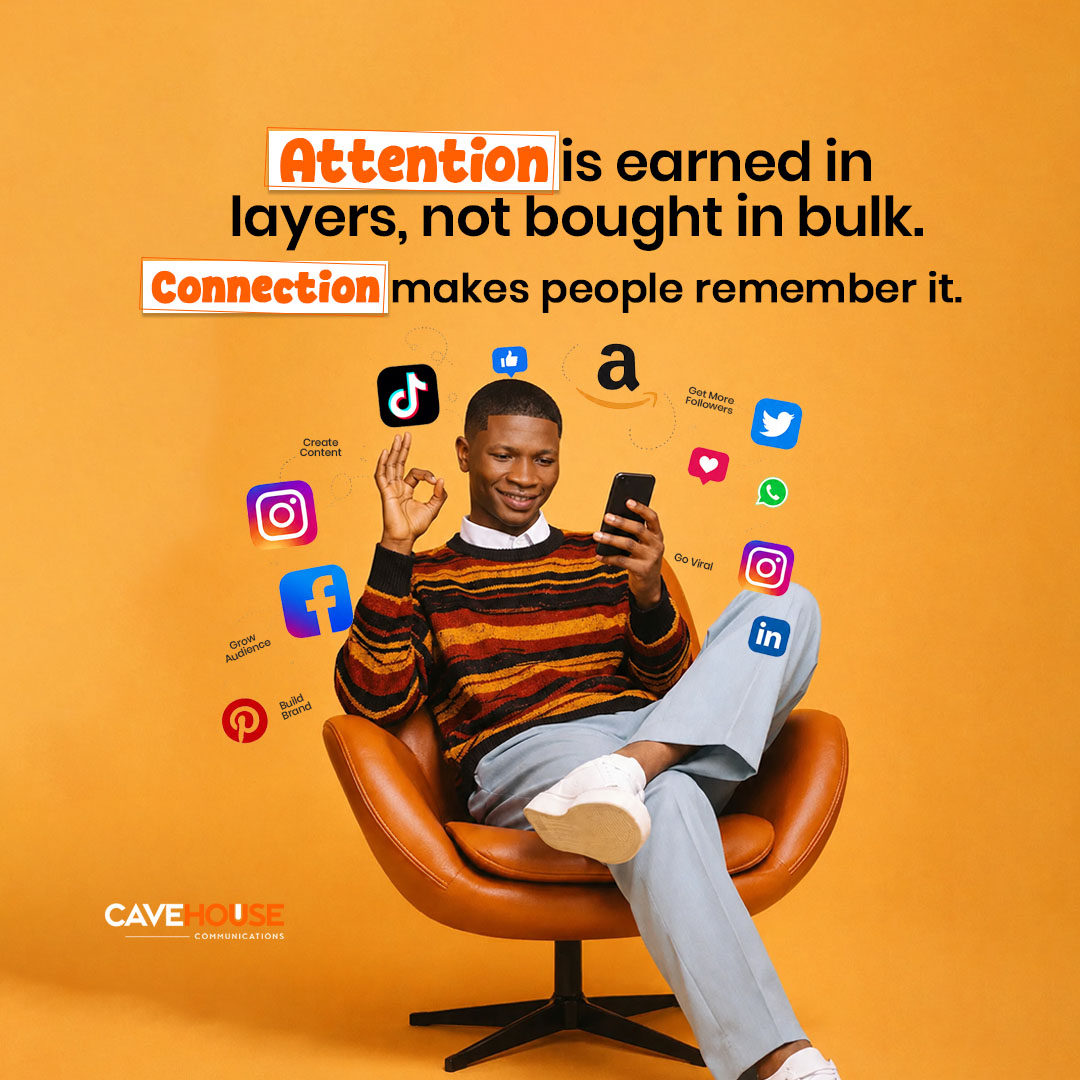
Attention Is Earned in Layers, Not Bought in Bulk
- Sacrefilms Media
- October 5, 2026
- Blogs
- Audience Engagement, Brand Awareness, Brand Communication, Brand Strategy, Business Growth, Consumer Behaviour, Content Marketing, Content Strategy, Creative Communications, Customer Experience, Digital Advertising, Digital Marketing, Digital Strategy, Marketing Strategy, Social Media Marketing
- 0 Comments
For decades, success in media was measured by one simple equation: reach more people, more often.
The thinking was straightforward. A larger audience meant greater awareness, and greater awareness was expected to translate into stronger business results. Media plans were built around impressions, frequency, and visibility, with success often defined by how many people had the opportunity to see a message.
That model is no longer enough.
Today’s audiences navigate an environment shaped by constant notifications, endless scrolling, multiple screens, and algorithmically curated content. Every day, consumers are exposed to thousands of messages competing for the same limited resource: attention.
In this reality, attention has become more valuable than exposure.
The brands that continue to rely on one-off campaigns or repetitive messaging often discover that visibility alone does not create meaningful engagement. A message may be seen, but it is quickly forgotten if it fails to create relevance or build momentum.
Modern communication requires a different mindset.
Attention Is Built Through Progression
Consumers rarely make decisions after a single interaction.
A prospect might first encounter a short video on LinkedIn, later see a behind the scenes story on Instagram, visit a company’s website to learn more, and eventually attend an industry event or webinar before making contact.
Each interaction contributes something new.
Rather than repeating the same message, every touchpoint should deepen understanding, strengthen credibility, or encourage the next action.
This layered approach transforms communication from isolated campaigns into connected experiences.
Instead of asking, “Did people see our message?” organisations should ask, “What journey did we create?”
Every Platform Has a Role
An effective communication strategy recognises that every platform serves a different purpose.
LinkedIn creates professional credibility.
Instagram reveals culture and personality.
A website demonstrates expertise through valuable insights.
Email nurtures relationships.
Events create memorable experiences.
Public relations strengthen trust.
When these channels work together, audiences experience a coherent narrative instead of disconnected messages.
This consistency builds familiarity, and familiarity builds confidence.
Designing for Attention Rather Than Interrupting It
For years, advertising focused on interruption.
The objective was to capture attention by inserting messages into people’s routines.
Today, audiences have greater control over what they consume. They can skip advertisements, mute notifications, unfollow brands, and customise their digital environments.
The most successful organisations therefore design communication that audiences choose to engage with.
This means creating content that educates before it sells, informs before it promotes, and contributes before it asks for attention.
When brands consistently provide value, attention becomes something they earn rather than purchase.
Measuring What Matters
Traditional media metrics remain useful, but they tell only part of the story.
Impressions indicate visibility.
Reach estimates audience size.
Frequency measures repetition.
None of these explains whether people genuinely cared.
Modern organisations should also evaluate:
- Time spent engaging with content
- Return visits
- Content completion rates
- Meaningful conversations
- Community participation
- Brand recall
- Customer advocacy
These indicators provide a richer understanding of whether communication is creating lasting relationships rather than temporary visibility.
A Strategic Perspective
At Cavehouse Communications, we believe attention should never be treated as a commodity.
It is built through intentional strategy, compelling creativity, and consistent execution.
Every interaction should move the audience forward.
Every platform should contribute to a broader narrative.
Every campaign should create momentum rather than simply generate impressions.
When organisations think in layers instead of isolated moments, communication becomes more memorable, more effective, and more valuable.
Final Thought
Attention is no longer captured in a single moment.
It is earned across many moments.
The organisations that succeed will not necessarily be those with the largest budgets, but those that build the strongest connections over time.
Visibility opens the door.
Consistency builds trust.
Meaningful experiences create lasting impact.
You Visualise. We Create.


