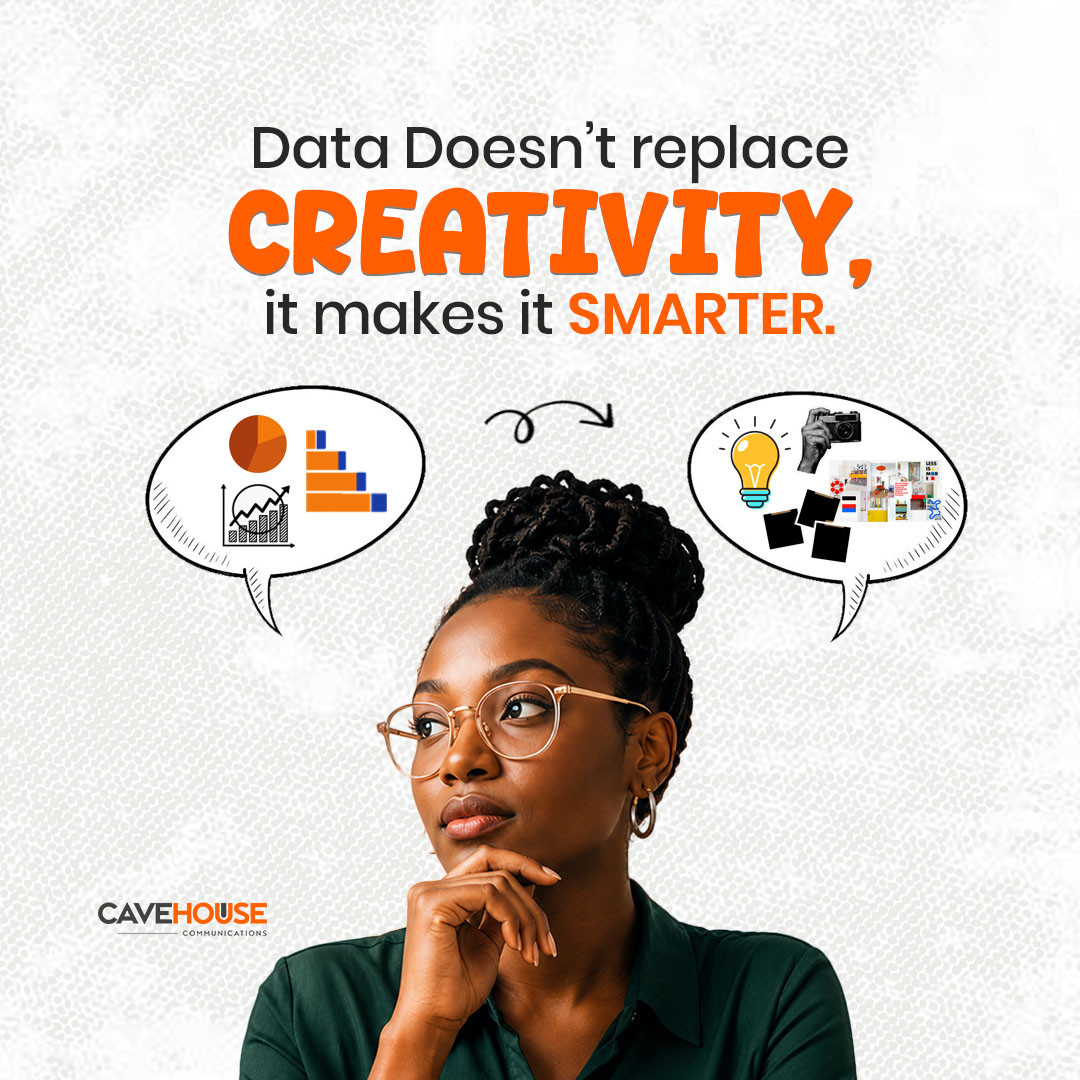
Data Gives Direction. Creativity Builds Connection.
- Sacrefilms Media
- September 28, 2026
- Blogs
- Brand Communication, Brand Strategy, Business Growth, Communications Strategy, Content Strategy, Creative Communications, Creative Strategy, creativity, Customer Insights, Data Analytics, Data Driven Marketing, Digital Marketing, Digital Strategy, Marketing Intelligence, Marketing Strategy
- 0 Comments

For years, businesses have treated creativity and data as though they exist on opposite sides of marketing.
One belongs to designers, storytellers, and creative teams. The other belongs to analysts, dashboards, and spreadsheets.
The most successful organisations have discovered that this divide no longer exists.
Today, creativity without insight is expensive guesswork. Data without creativity is simply information that fails to move people.
Modern business growth happens when both work together.
The Evolution of Marketing
Marketing has changed dramatically over the past decade.
Businesses once relied heavily on intuition, assumptions, and broad demographic targeting. Campaigns were often built around one creative concept and measured only after they had finished.
Today’s environment is fundamentally different.
Every customer interaction generates valuable insight.
Every website visit.
Every video view.
Every click.
Every abandoned shopping cart.
Every enquiry.
Every comment.
These interactions reveal patterns that help organisations understand what audiences genuinely value.
Data has become one of the most valuable strategic assets available to businesses.
But information alone does not create influence.
People rarely remember statistics.
They remember stories.
They remember emotions.
They remember experiences.
This is where creativity becomes indispensable.
Data Shows Behaviour
Creativity Explains It.
One of the biggest misconceptions surrounding data driven marketing is that numbers replace creative thinking.
They do not.
Instead, data removes uncertainty.
Imagine two businesses launching similar campaigns.
The first relies purely on instinct.
The second studies customer behaviour before creating content.
They know:
- which videos receive the highest watch time
- which messages generate enquiries
- which channels deliver the strongest engagement
- which audience segments convert most consistently
The second organisation begins with clarity.
Rather than guessing what customers might appreciate, they understand what customers are already responding to.
Creativity then transforms these insights into meaningful communication.
The result is marketing that feels relevant instead of random.
Why Creativity Still Wins
Research consistently shows that creative quality remains one of the strongest drivers of campaign effectiveness.
Technology can improve targeting.
Platforms can improve delivery.
Analytics can improve optimisation.
Only creativity creates emotional connection.
Businesses often invest heavily in media buying while underinvesting in creative development.
This imbalance limits results.
The most successful campaigns combine strategic insight with memorable storytelling.
Great creative gives audiences something worth paying attention to.
From Campaign Thinking to Continuous Learning
Marketing used to revolve around launching campaigns.
Today, successful organisations build learning systems.
Instead of asking, “Did the campaign work?”
Leading organisations ask, “What did we learn today?”
Every advertisement becomes a source of insight.
Every piece of content becomes a test.
Every customer interaction improves the next decision.
This continuous optimisation allows businesses to become more relevant over time.
Marketing is no longer a series of isolated campaigns.
It is an evolving conversation.
What Businesses Should Really Measure
Many organisations still focus almost exclusively on impressions and reach.
These metrics have value.
But they rarely explain why something succeeded.
Modern organisations measure deeper indicators:
- audience retention
- engagement quality
- customer intent
- repeat interaction
- conversion behaviour
- lifetime customer value
These measurements provide richer understanding.
They reveal not simply whether people saw your message, but whether your communication influenced action.
Authenticity Is Hidden Inside the Data
Analytics rarely tell businesses exactly what to create.
They reveal what audiences appreciate.
For example, many brands discover that behind the scenes videos outperform polished commercials.
This insight is about much more than video style.
It suggests customers want transparency.
They want to understand the people behind the business.
They value authenticity over perfection.
Businesses that interpret these signals correctly adjust far more than their content.
They reshape how they communicate.
Strategy Before Creativity
At Cavehouse Communications, we believe creativity achieves its greatest impact when guided by strategy.
Strong ideas should never exist in isolation.
Every creative decision should answer a business challenge.
Each production should support measurable objectives.
Every campaign should strengthen long term brand growth.
This is where data becomes more than reporting.
It becomes strategic direction.
The Organisations That Will Lead
The future belongs to organisations capable of combining analytical intelligence with human creativity.
Artificial intelligence will continue producing more information.
Platforms will continue generating more metrics.
What will remain difficult to replicate is meaningful storytelling built upon genuine customer understanding.
Data identifies opportunities.
Creativity transforms opportunities into relationships.
Together they create sustainable growth.
Final Thought
Businesses can no longer afford to choose between creativity and data.
The organisations that outperform competitors are not necessarily producing more content.
They are producing more relevant content.
When insight guides imagination, communication becomes clearer, stronger, and more valuable.
Data gives direction.
Creativity builds connection.
Together, they determine who leads tomorrow’s market.